
By Joe Giacomin, Managing Director, Automotive
(248) 453-0092 | jgiacomin@asgteam.com
All Aboard: Talent Acquisition, Job Offers, Implementation
The style and process employers use to present job offers and onboard new talent can vary dramatically from one organization to another.
Imagine for a moment that you have been employed by a particular company for a decade or more. Following what may be a lengthy battery of interviews, you receive a written offer via e-mail. The document is comprehensive, outlining the job title, compensation, benefits and vacation policy together with a list of preliminary procedures (physical exam, administrative requests etc.) to be completed prior to a specified start date. There is typically a space reserved for a signed acceptance, accompanied by a “decision no later-than date” and signed by the Director of Human Resources. I suppose, with the advent of remote work, text messaging, and fewer human encounters, this scenario might be viewed as a normal business procedure. Caution: This method may also leave a candidate feeling incomplete. While the formal offer letter described is an essential component in the hiring process, to ensure acceptance and a smooth transition, an organization needs to insert a human into Human Resources.
 An investment of time and treasure is expended to arrive at the offer stage. Please consider… the candidate in question will be walking into his current supervisor’s office, resigning a position held for say, 15 years, and joining a new organization. He or she will invariably have some questions for the prospective new employer and needs to feel comfortable making one of the key decisions in life.
At this time, is where the hiring authority should verbally present the offer, ideally in person. There is nothing quite like meeting with a candidate, shaking their hand and presenting the offer. Letting a person know what their addition and the importance of their contribution means to the company will pave the way toward a successful transition.
Once a candidate has accepted, the onboarding process can begin. There is typically a period (two weeks is average) between acceptance and start date. We suggest that a visit or two be scheduled during the transition to acclimate the candidate. Everything from administrative tasks, touring the facility, workspace/office assignment, parking, etc. should be addressed. Have the new employee meet people he/she will be working with. Organizing a lunch with staff members can also be an effective onboarding touch.
Your company’s mission is important. The road traveled recruiting, screening and selecting the best talent has resulted in a final selection. Congratulations! The candidate has selected your company, too. It’s no time to drop the ball at the goal line.
Killing The Golden Goose
 General Motors Corporation is currently building some of the best vehicles in their storied history. Across the board… their cars, trucks and SUV’s propelled by traditional internal combustion engines and electric powerplants are competitive within every segment. Personally, my family members (including yours truly) are enthusiastic about our GM vehicles.
However, flash-back a few decades. There was a period when the financial types essentially overruled the designers and marketers, together with their creativity and industry knowledge. There is an industry term called “badge engineering”. Badge engineering (rebadging) is the practice of selling the same base vehicle under different brand names, often with only cosmetic changes. This manufacturing concept is extremely efficient and cost effective when utilized properly. By starting with a specific “platform” and tailoring it externally and internally, auto companies can maximize profits while offering the consumer a variety of different transportation experiences and trim options.
However, if left unchecked, it can be challenging for the manufacturer and consumer.
Example: The Legendary “J Body” from GM – produced throughout most of the 1980’s.
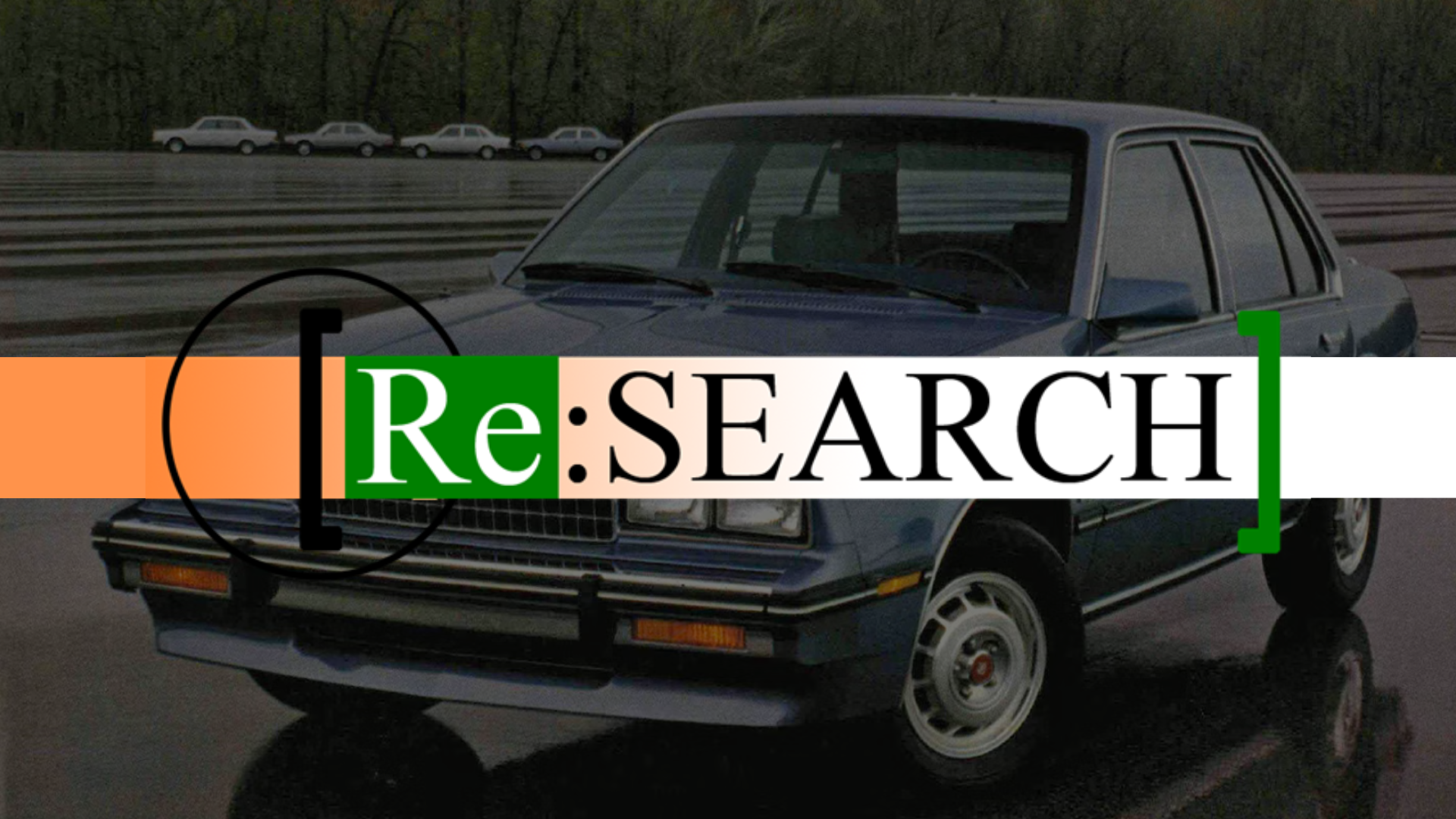
You may recall the Chevrolet Cavalier. It was an economical, sporty vehicle and available in coupe, sedan and even a snazzy convertible. It was built on the General Motors J-Body platform. A version built from the same platform was also offered as a Pontiac Sunbird, Oldsmobile Firenza, Buick Skyhawk and, to satisfy requests by Cadillac dealers for an “entry-level” offering…the “J” body also morphed into the ultimate Cadillac Cimmaron.
This is where strong financial influence surpassed design and marketing consideration, and as a result General Motors suffered. GM management reasoned if they could produce a practical economy vehicle, (the Chevrolet version) and make some cosmetic changes for each product line, the potential for maximum profit across five vehicle lines would be colossal. No greater marketing mistake was realized than with the Cadillac version of the “J” Body. The Cimmaron was slightly more luxurious (seating, trim, options). However, it didn’t play well with what consumers had come to expect from the Cadillac brand and heritage. It didn’t look or perform like one either. (Did the non-product types think the public wouldn’t notice?)
I suppose the lesson here is that there are efficiencies that can and should be exercised. It’s just good business. But there is a fine line between extracting short-term gains vs. producing a desirable, sustainable product which will maximize customer satisfaction and build brand loyalty.
In the case of Cimmaron, industry experts were quick to point out that although the Cadillac brand experienced some highlights in the post J-Car years, it would take some time to repair their image and return to the high level of success that Cadillac enjoys today.
There is a deeper lesson here. In the most basic terms, a company must never lose its focus regarding where and how their revenue is obtained. Financial efficiencies, while essential to the health of any “for-profit” organization, are only as relevant as the product or service they represent. Saving 100% of nothing – is nothing.